
A platform to acquire professional expertise, by the slice
Need ten minutes of a professional who’s seen it all? You don’t always need a retainer. Sometimes you just need one good answer. That’s what Athenian is for.
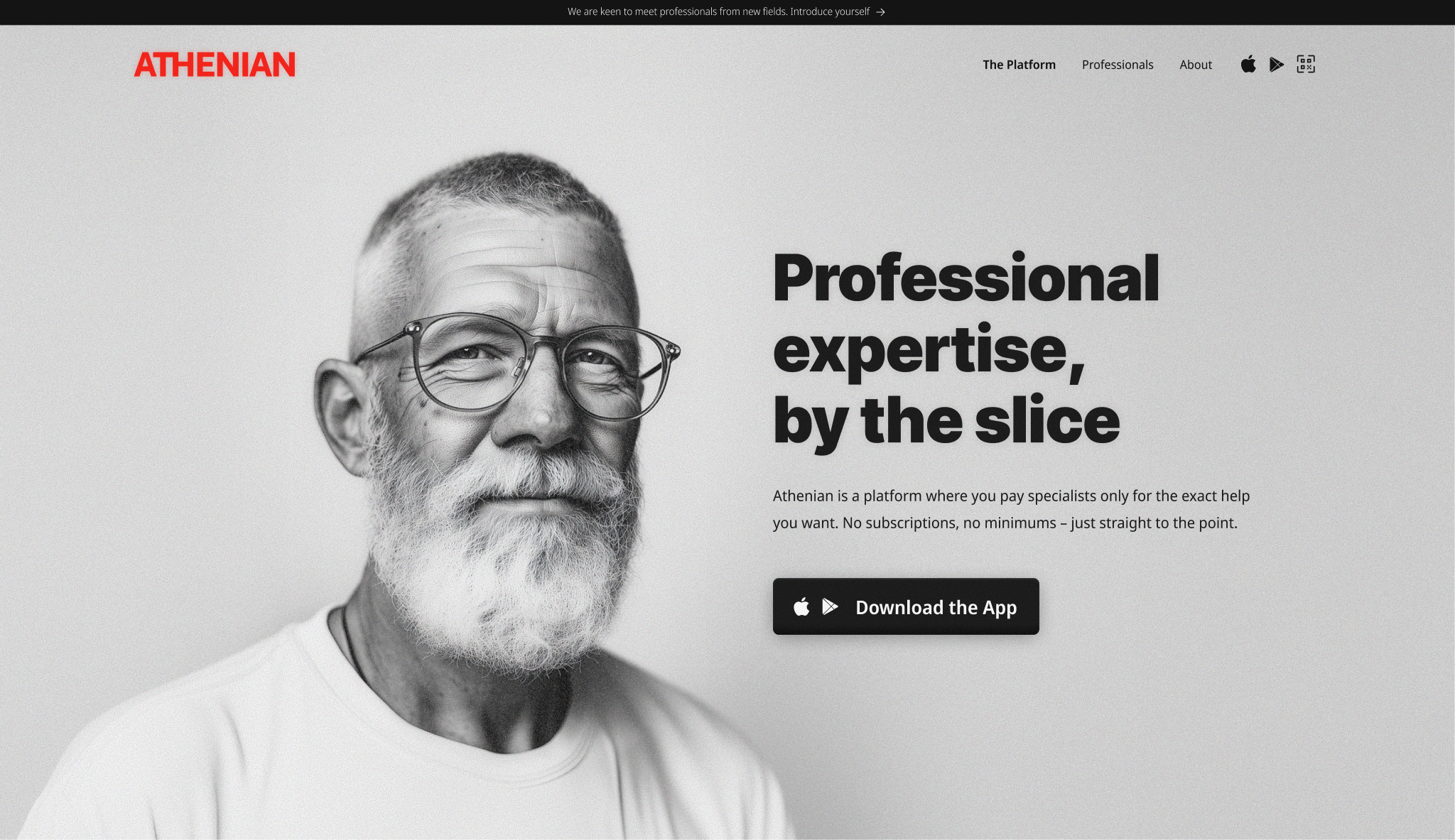
For years I watched friends and colleagues hit the same wall. Someone needed a solicitor to look at one clause in a contract. Someone else wanted an accountant to glance over a tax return before filing. Real questions, with real money or risk attached, and no clean way to pay a real professional for ten minutes of their time.
That gap was the bet. I left my full-time job in 2023 to build the platform that should have existed already. Athenian is a marketplace where you can buy professional expertise in exactly the size you need it. No retainer, no minimums, no signing up to a course. One question, one expert, one quote, one answer.
The thesis underneath is simple. AI is good enough to interpret what someone needs and route it to the right specialist. But the answer itself has to come from a human. AI facilitates. Humans sign off.
Here is how it works in three steps, from the client’s side:
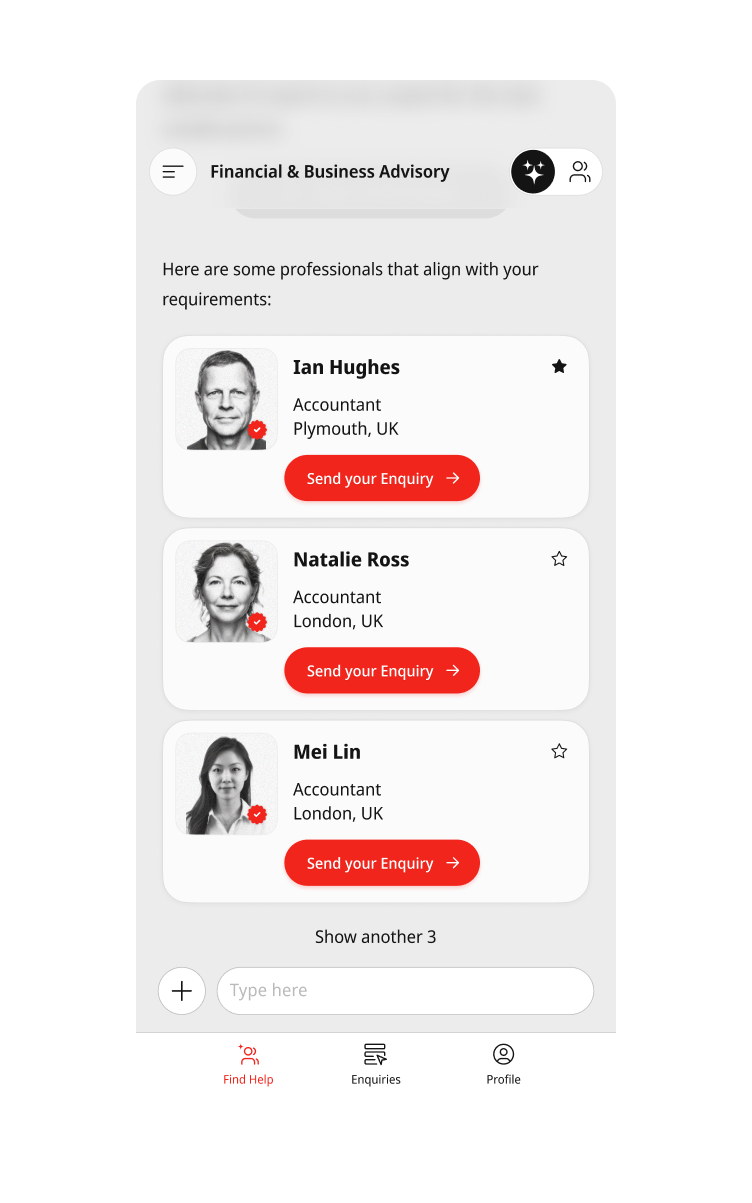
Get matched. You describe what you need in a few lines. The AI concierge interprets the request, asks any clarifying questions, and proposes a shortlist of professionals whose experience fits the situation.
Receive a quote. The professional you choose reviews the brief and sends back a clear quote: price, time, scope. You decide whether to go ahead.
Confirm and start. Once you accept, a binding service agreement is generated and payment is taken. The professional delivers the agreed work, in or outside the app, and Athenian takes 8% of the fee.
The Athenian app
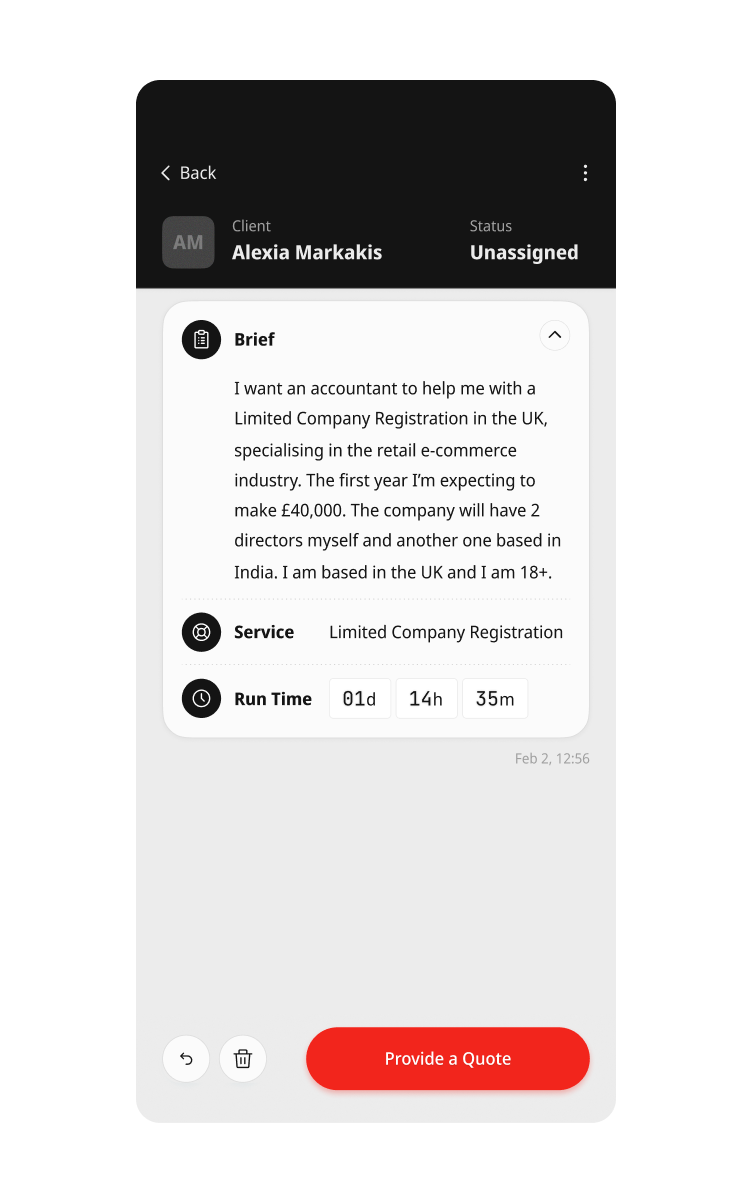
Every design decision in the app starts from one principle: put the professional first. Marketplaces usually optimise for the client. Athenian has to do the opposite. Without professionals turning up and answering, there’s no platform. And professionals won’t turn up if the experience treats their time like a commodity.
Two principles shape the build. The first is to minimise friction. Professionals don’t have time for back-and-forth, so by the time a request reaches them, the brief already contains everything they need to quote against. The AI concierge does that work upstream, on the client’s side, before the professional sees anything.
The second is to formalise the exchange. A binding service agreement is generated the moment a quote is accepted. That single mechanic protects the professional from a pattern most of them know too well: the friend, the cousin, the acquaintance asking for “just a quick look” and never paying. It also gives the client the credibility and accountability they’re paying for.
For the Client
Three ways in
Describe what you need. Search by profession. Or type the name of someone you already trust. The app meets you wherever you are.
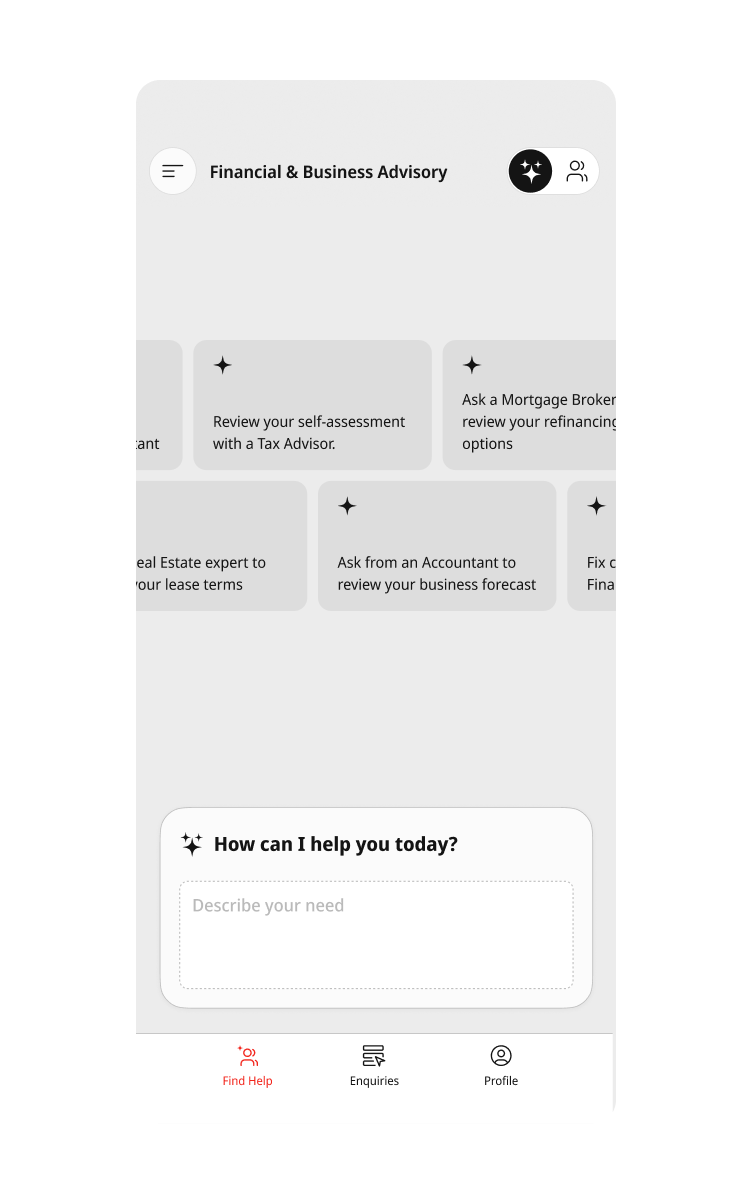
The right person for the right task
The AI concierge listens, asks what it needs to ask, and matches you with professionals whose experience fits the situation. No guesswork involved.
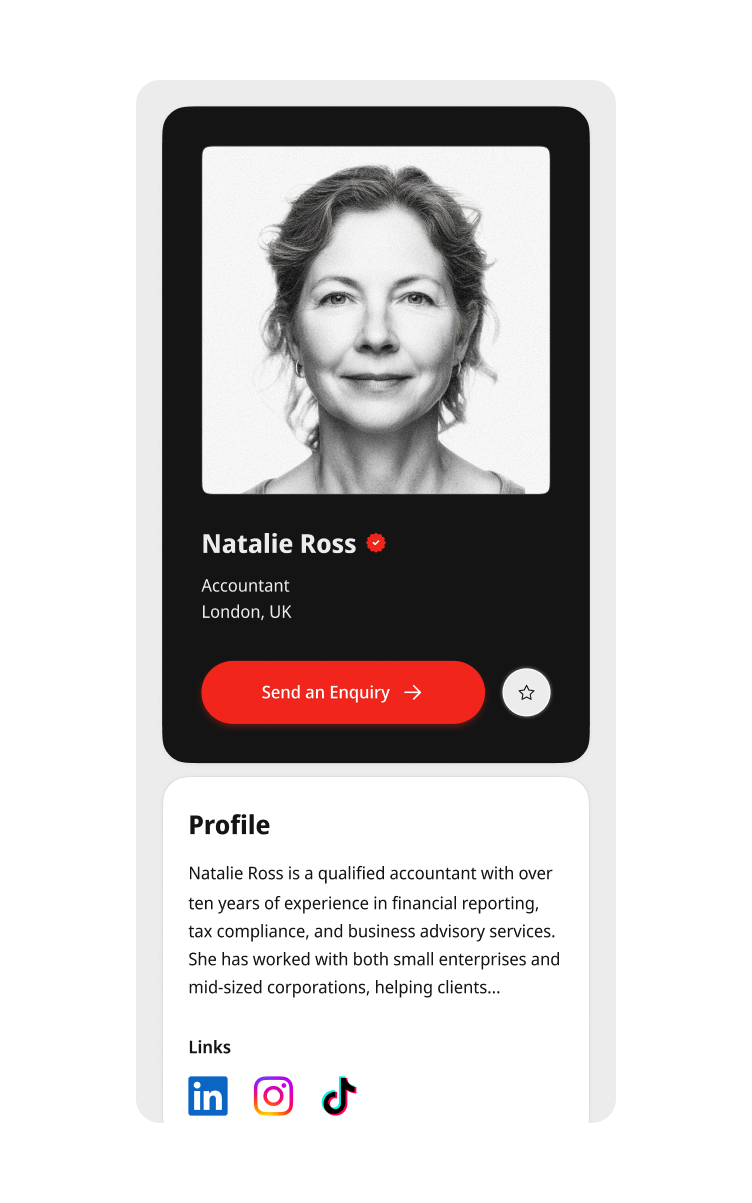
Know who you’re hiring
Each professional brings their own profile to Athenian: credentials, social presence, links to their own work. You judge for yourself before committing.
Pay only if it makes sense
The professional sends a quote. Price, time, scope, all in one place. You decide whether to go ahead. No payment until you do.
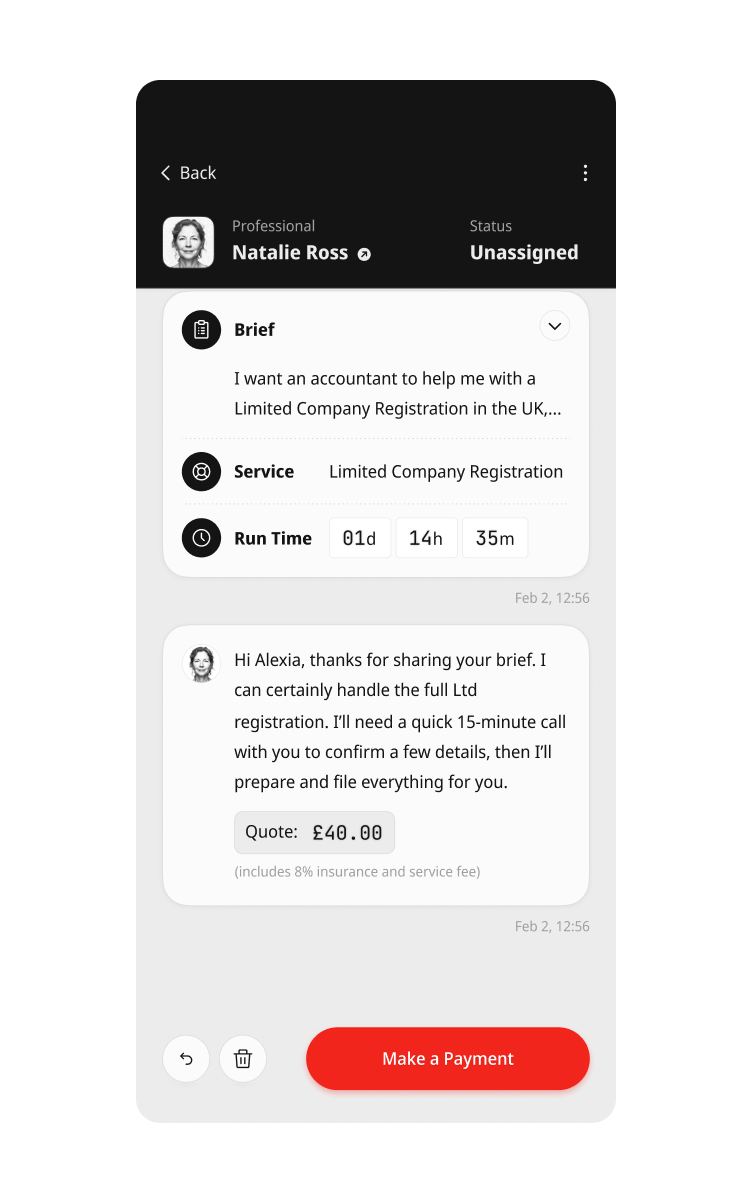
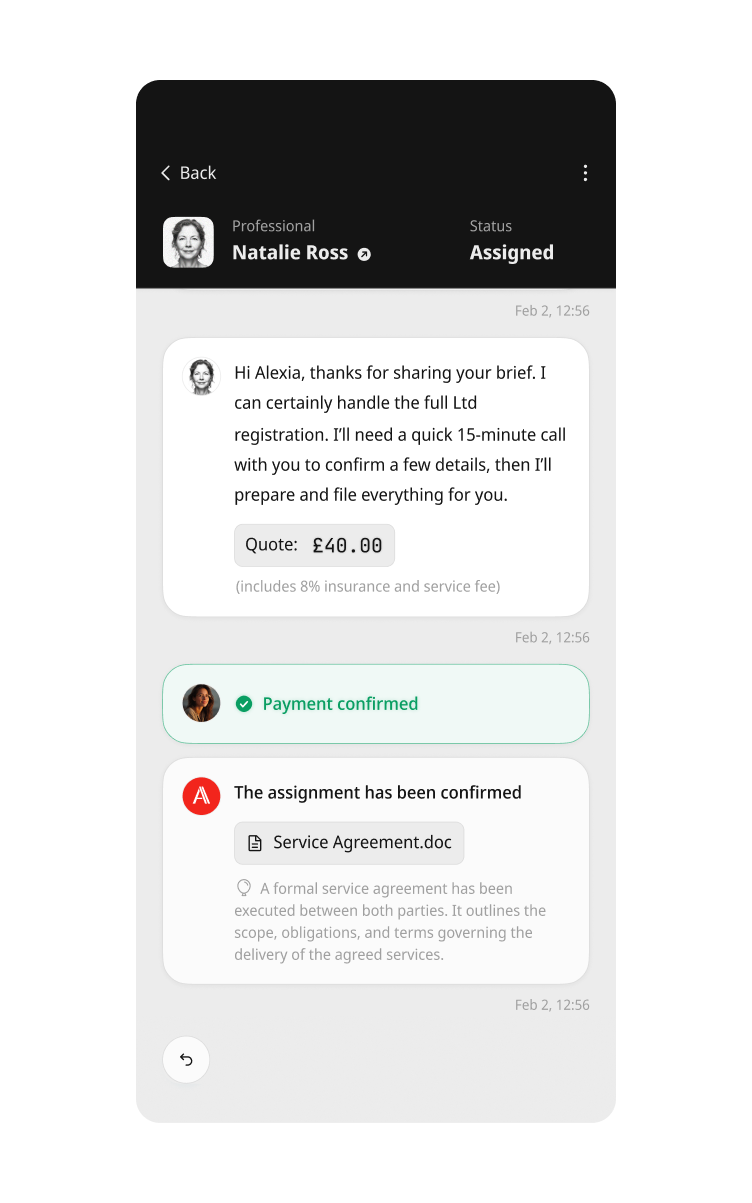
Backed by an agreement
The moment you pay, a binding service agreement is in place. The professional is committed to deliver what was quoted. You’re protected if they don’t.
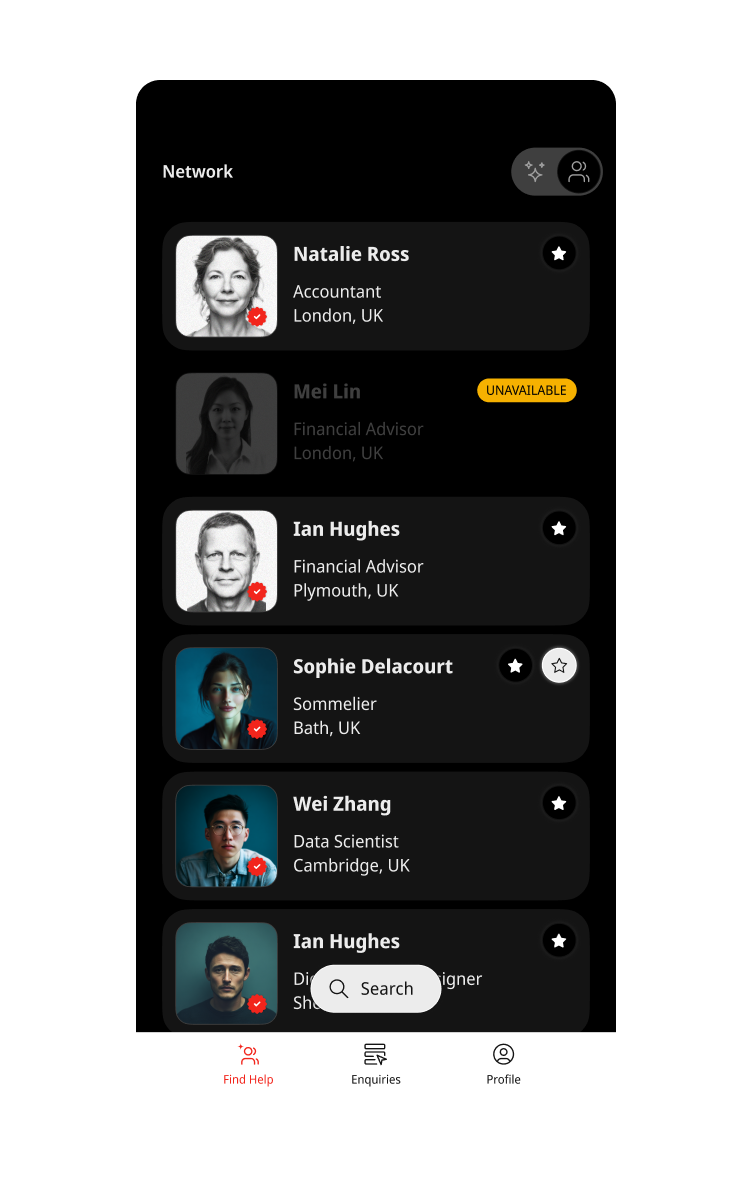
Build your own network
Save the professionals you’d return to. Athenian becomes a personal network of trusted experts, ready when you need them.
For the Professional
Onboard in minutes
Tell the AI about your background and what you do. It builds the profile for you. One screen, no forms, no checklist.
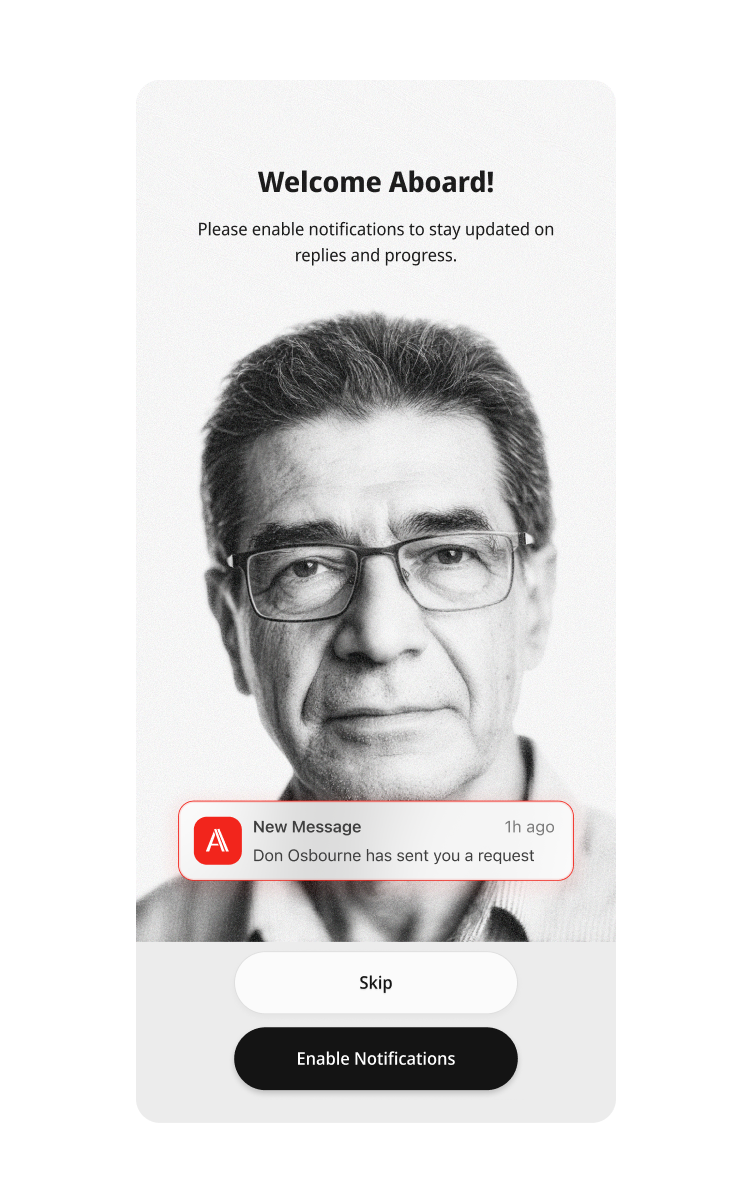
No back-and-forth
The AI gathers the context from the client before anything reaches you. You see a complete brief, ready to quote against. Your time starts when the work does.
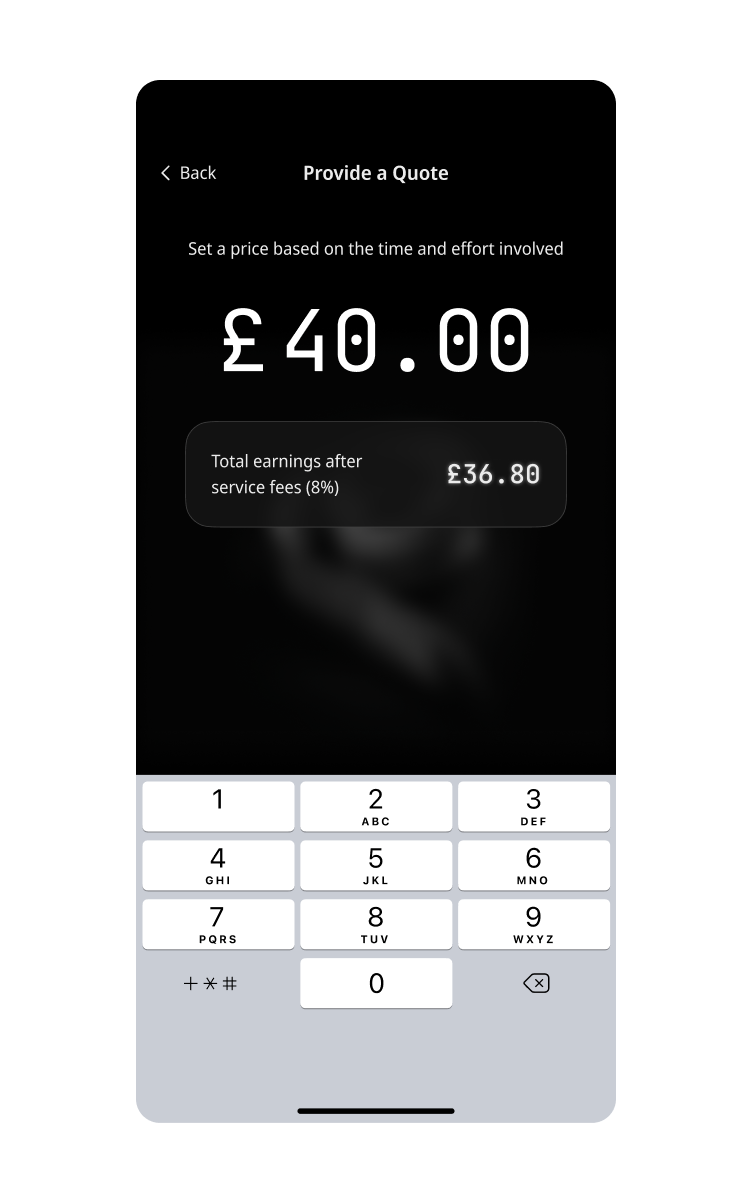
You set the price
Every quote is yours to set. Athenian takes 8% of the agreed fee. Beyond that, what your expertise is worth is between you and the client.
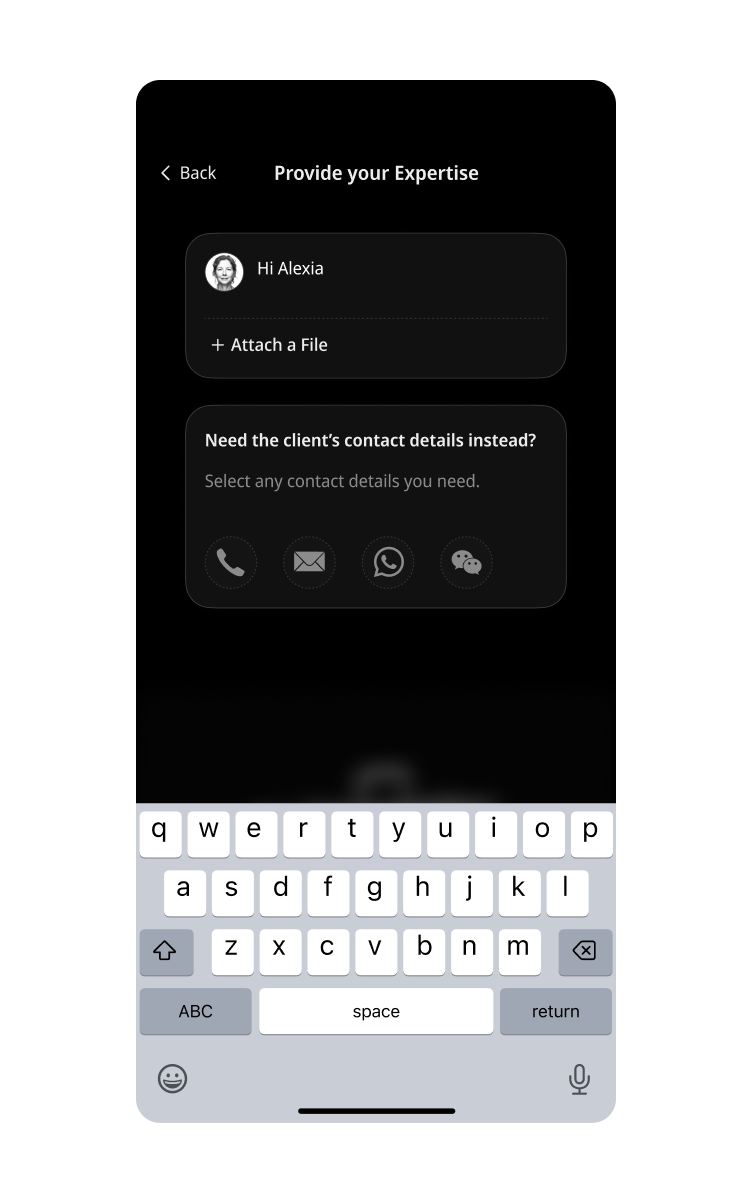
The platform stops at the agreement
Once the contract is in place, deliver the work however you and the client prefer. Phone, email, WhatsApp, in person. Athenian doesn’t get in the way.
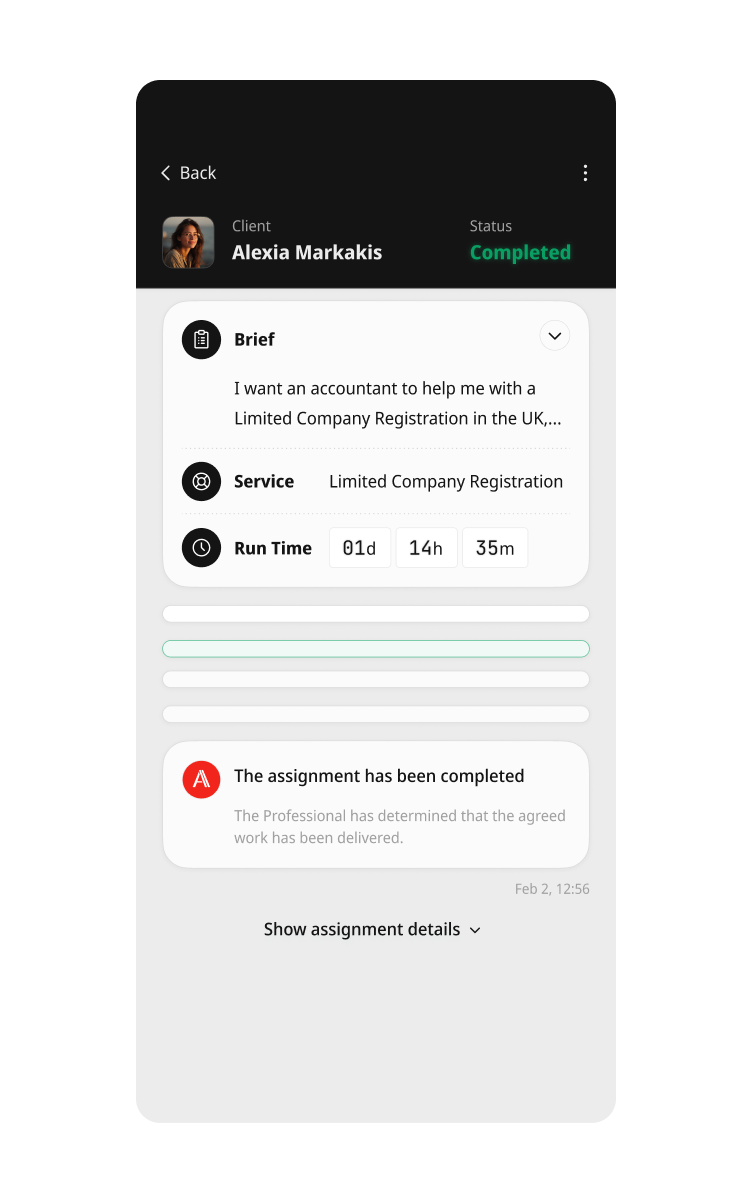
Good work compounds
Each completed job adds to your reputation. The better you serve, the more often Athenian surfaces you to new clients. The flywheel is yours to build.
Bring your own clients
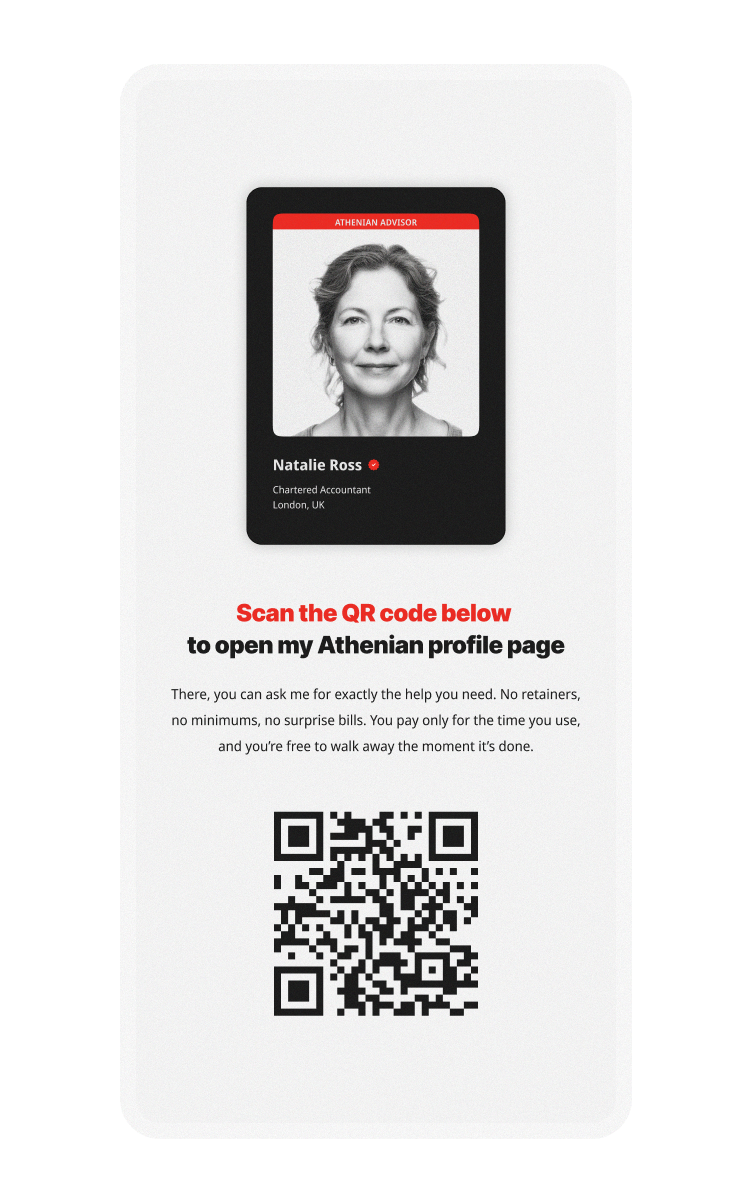
A personal Athenian page with a link and QR code. Send existing clients straight there. Athenian handles the rest.
The website
The app is where Athenian works. The website is where Athenian gets explained. A platform that sells expertise by the slice has a teaching problem before it has a sales problem. Most visitors arrive without a mental model for what Athenian is. The website’s job is to give them one, fast, in language that sounds like a person and not a pitch deck.
It’s organised around four audiences, each landing on a different surface. Clients learn how the proposition works and where to download the app. Professionals find a separate space that explains why Athenian is worth their time. The about section names the problem Athenian addresses and invites investors into the conversation. And every professional gets a dedicated page they can send their existing clients to directly.
The brand story
The name came from the Athenian Mercury, a 17th-century London publication where readers sent in questions to be answered by a panel of experts. It circulated in coffee houses where people traded news and ideas. One of the earliest advice publications and, in spirit, the closest historical equivalent to what Athenian is trying to do four hundred years later: connect people with someone who knows the answer.
The word also nods to Athens. Long associated with learning, with sharp debate, with the kind of person who has earned the right to give an opinion. An Athenian is thoughtful, highly educated, and deeply skilled in their field. That’s the company the platform keeps.
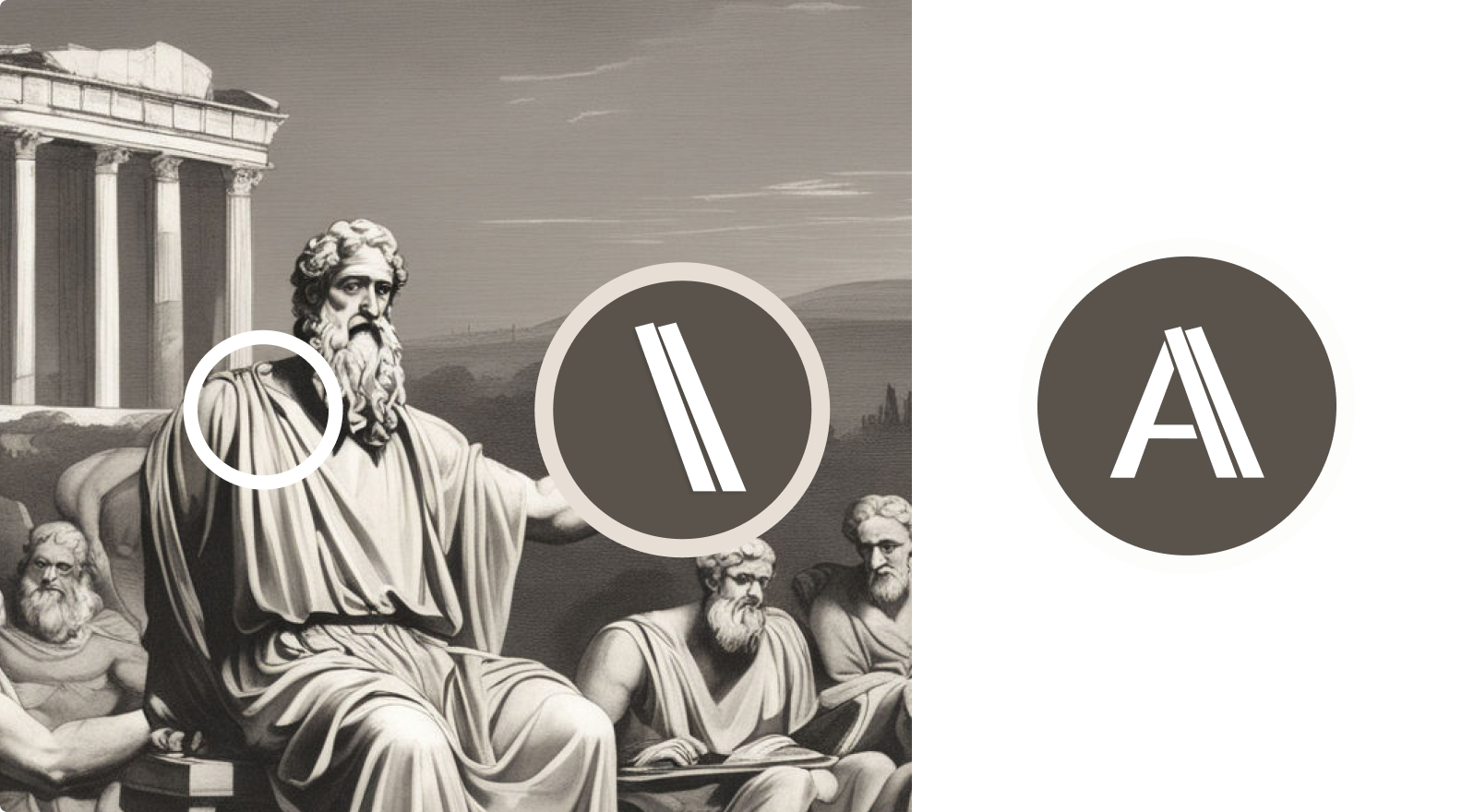
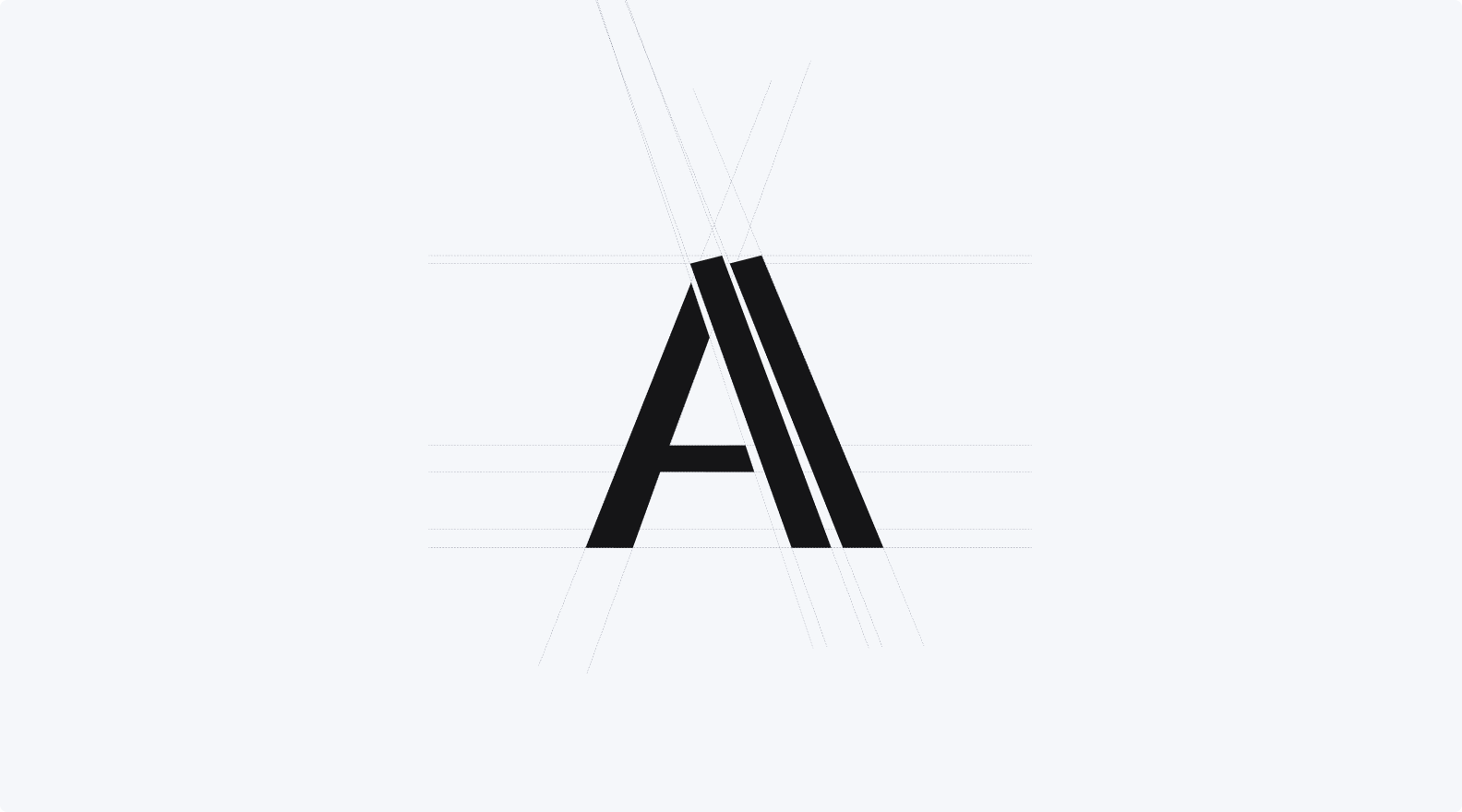
The lettermark is its own object. I drew the shape from the chiton worn by ancient Greek philosophers, abstracting the soft fold of fabric over the shoulder into a single letter. A reference most people will never spot, which is fine. Brands earn their depth from details no one is asked to notice.
A note while we’re here. The lettermark looks a little like Anthropic’s A, and the comparison comes up. Athenian’s A was designed and trademarked before Anthropic’s existed. Two different teams arrived at adjacent solutions to the same geometric problem. That happens.
Under the hood
The architecture starts with a deceptively simple decision: every professional on Athenian opts into a finite set of micro-tasks. An accountant might offer Ltd company registration, self-assessment review, VAT advice. A solicitor might offer contract clause review, NDA drafting, IP guidance. Each micro-task is a discrete, well-defined unit of work, with its own typical scope and price band.
The platform’s job is to match enquiries to micro-tasks, not to professionals directly. That’s what makes the AI concierge possible. When a client describes their need, the concierge isn’t trying to match free-text to free-text. It’s running the conversation against a structured table of micro-tasks, asking whatever questions it needs to identify the right one.
Through the exchange it extracts four things: the right profession, the right micro-task within it, the context required for that micro-task to be quoted accurately, and anything else relevant the professional should know before responding. The output is a packaged brief. The client reviews it, amends it if anything’s off, and the concierge surfaces three professionals best suited to take it on. The client picks one. The brief travels intact. The professional reads a complete request, not a half-formed enquiry.
The app is built in Expo with Supabase as the backend, shipping to iOS and Android. Mobile-native rather than web-first because the product depends on instant notifications: a quote arriving, a brief landing, a job confirmed. Email and browser tabs aren’t fast enough for that loop.
The visual design is deliberately quiet. Black, white, a single accent of red. The proposition is novel enough to do the work of holding attention; the interface should get out of its way. Distraction-free isn’t a style choice. It’s a way of letting the content and the AI breathe.
Reflections
I built the platform, brought on the first professionals, and got close enough to launch to feel the wind change. The technology Athenian was designed around kept moving faster than the build cycle. Every month, the AI capabilities the product depended on got cheaper, better, and more accessible to the people I was building for. By the time I’d run out of runway, the question wasn’t whether Athenian was a good idea. It was whether it was still the right shape.
What stayed true through all of it was the audience. There’s a real group of people who want a human in the room when something matters. Not most people. A small percentage, but a confident one. They value trust over speed, judgement over output, accountability over efficiency. That audience didn’t disappear when AI got better. If anything, it sharpened.
What changed was the professional’s role. AI got good enough to do the micro-tasks itself, which meant the original mechanic of clients buying expertise directly from professionals was being out-competed at the bottom end of the market. Athenian v2 is the response. Instead of routing tasks to professionals, I’m sitting down with each one and building agents that carry their domain knowledge and their way of working. Clients buy the agent’s output, the professional supervises and signs off. Same trust contract, different mechanic.
It’s a sharper version of the original thesis. AI facilitates. Humans sign off. The words haven’t changed. The architecture has. V2 is in motion now. If you want to follow where it goes, athenian.app is taking email signups for updates.