
A multi-persona AI workspace for better decisions
What if instead of asking one AI assistant a question, you could walk into a room full of specialists and let them debate it?
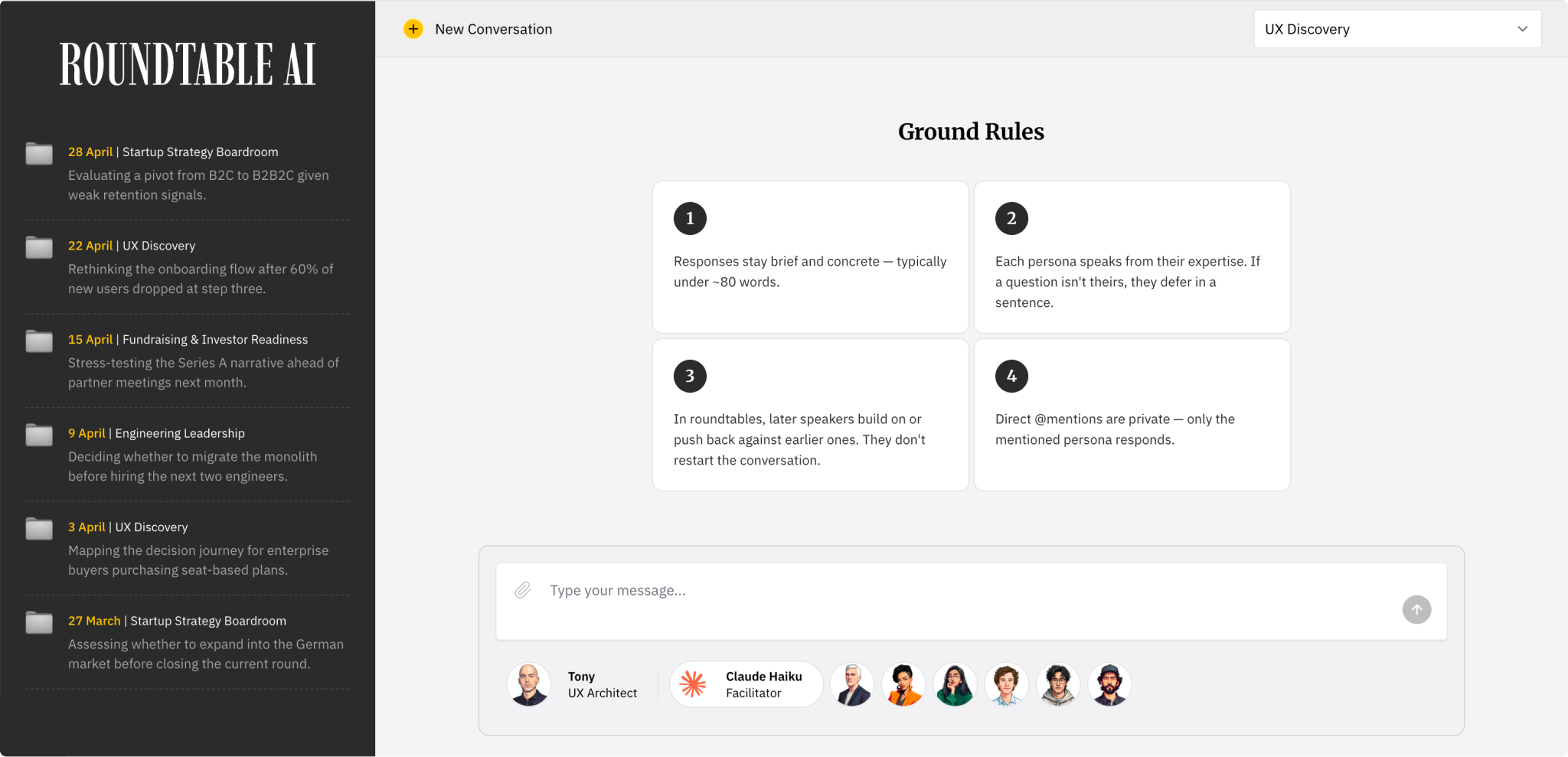
Roundtable AI is a multi-persona chat interface where every conversation happens inside a room — a curated set of AI specialists assembled for a specific type of discussion. A UX Discovery room might seat a researcher, a product manager, a data scientist, and a business analyst. A strategy session pulls a different mix.
An invisible facilitator agent runs the meeting. It reads each message and decides whether to route it to the most relevant persona, or call a full roundtable where every specialist responds in sequence, each one informed by what the previous said. The result feels less like querying a model and more like chairing a meeting.
Users can also bypass the facilitator entirely, addressing any persona directly for a focused one-on-one exchange. At any point, the facilitator can be asked to synthesise the thread, extracting key positions, open questions, and decisions from the conversation so far.
Key Features
Rooms
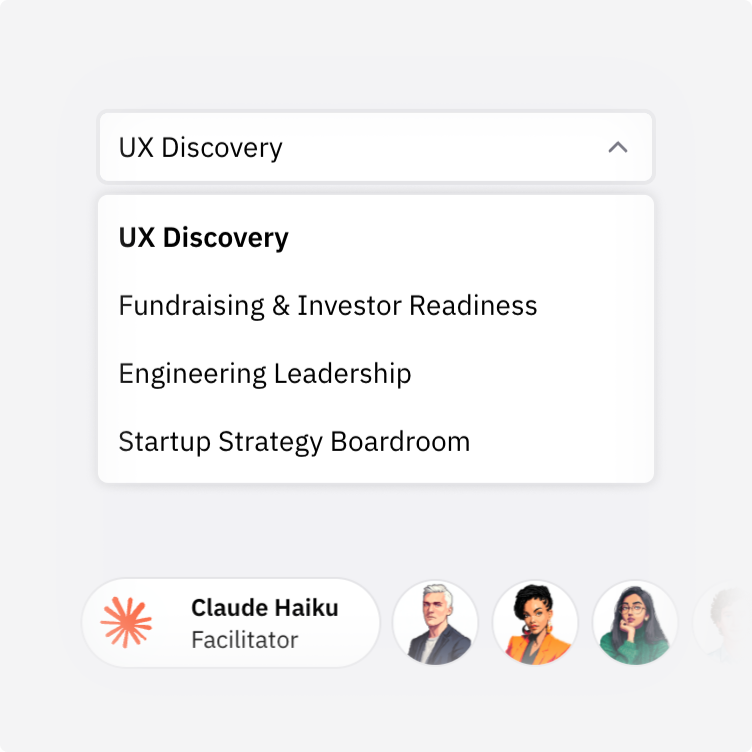
Every discussion starts with choosing a room. Each room is a pre-configured set of personas assembled for a specific domain: UX discovery, engineering decisions, investor readiness. The right specialists are already in their seats before the conversation begins.
The Facilitator
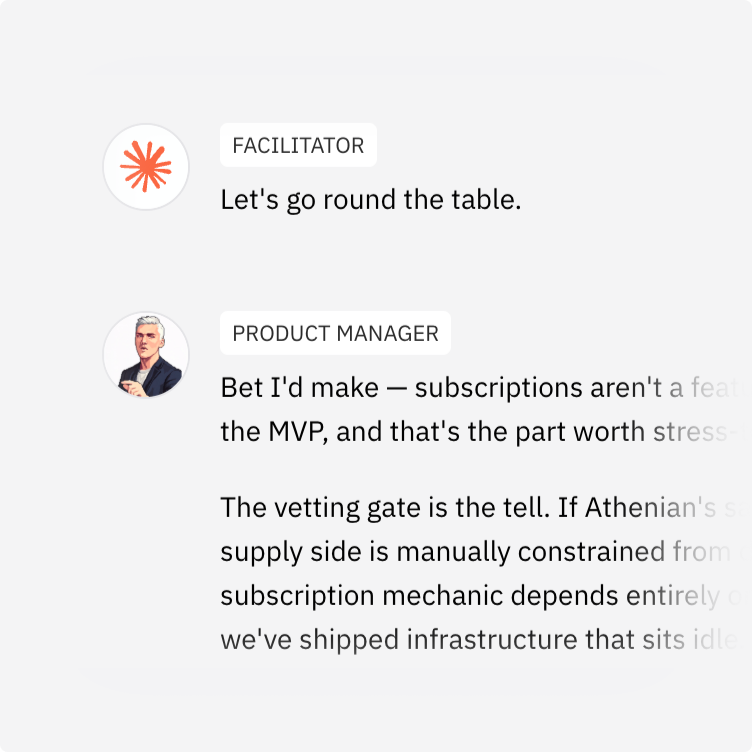
A hidden orchestration layer runs every session. It reads the discussion as it unfolds and makes a call: bring in one expert, or open it up to the room. The user never sees the routing decision, just a conversation that responds with the right level of depth.
Direct Messages
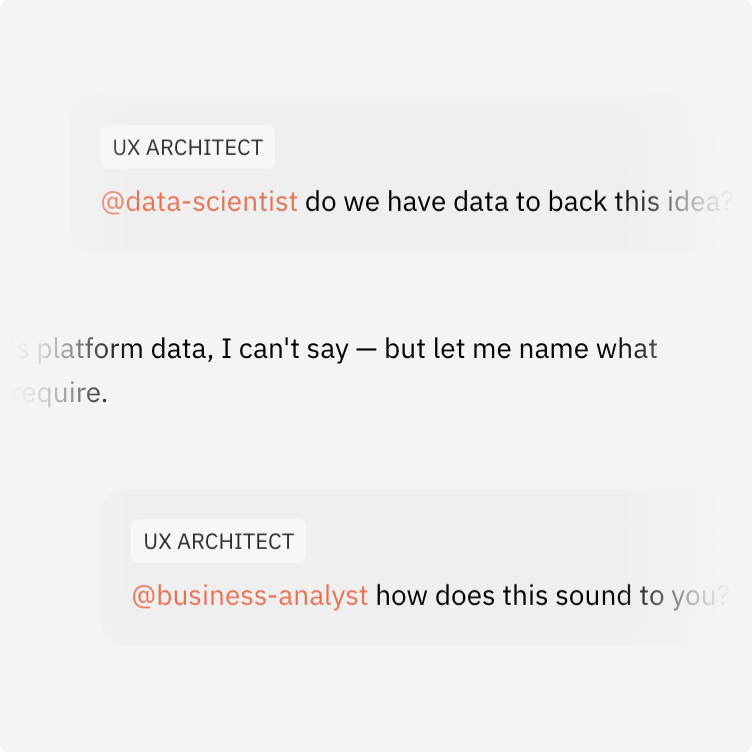
Not every question needs the whole room. The discussion organiser can address any persona directly, pulling them aside for a focused exchange without breaking the flow of the wider conversation.
Under the hood
Each persona in Roundtable AI is built from two layers. The first is a structured identity spec: name, voice, intellectual lineage, and areas of authority. This is what makes a researcher sound like a researcher and not a generic assistant with a label.
The second is a domain knowledge pack, grounded in a RAG system. A vector database holds practitioner frameworks, published research, and community-contributed expertise specific to each persona’s domain. At query time, the most relevant knowledge is retrieved and injected into the persona’s context before it responds. The knowledge base updates independently of the model, so personas become more capable over time without retraining. The underlying model is also configurable; Roundtable AI defaults to Claude by Anthropic but the architecture is model-agnostic.
Reflections
Roundtable AI is a natural fit for UX practice — a discipline that is fundamentally about holding multiple viewpoints simultaneously. Stress-testing a design direction against a researcher, a product strategist, and a business analyst in a single session surfaces tensions that a single-model query might never catch.
The most unexpected outcome of the exploration was how much persona visibility changed the quality of interaction. When an agent has a name, a face, and a domain it owns, users engage differently. They direct questions deliberately. They trust specific answers more because they know whose answer it is.
This points to something AI providers should be thinking about more seriously. Capability is largely a solved race. The underexplored frontier is identity: agents that feel like real characters from a real workplace, with persistent personality and legible expertise.